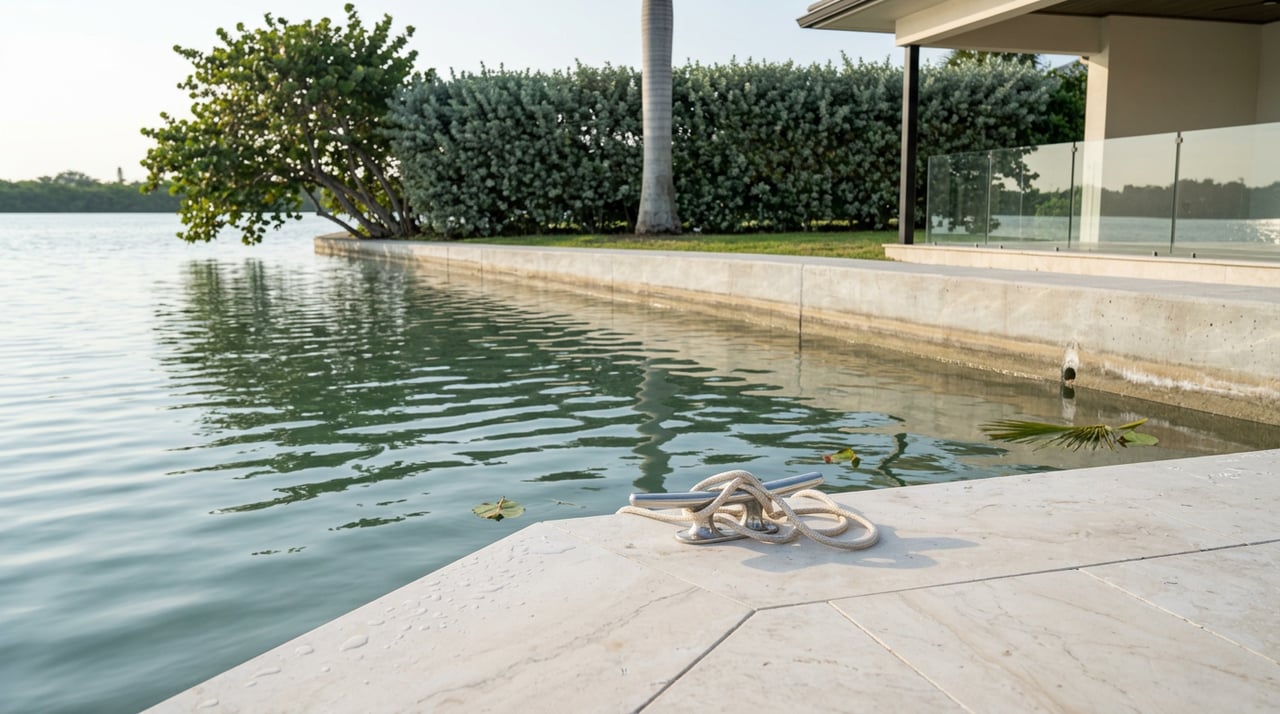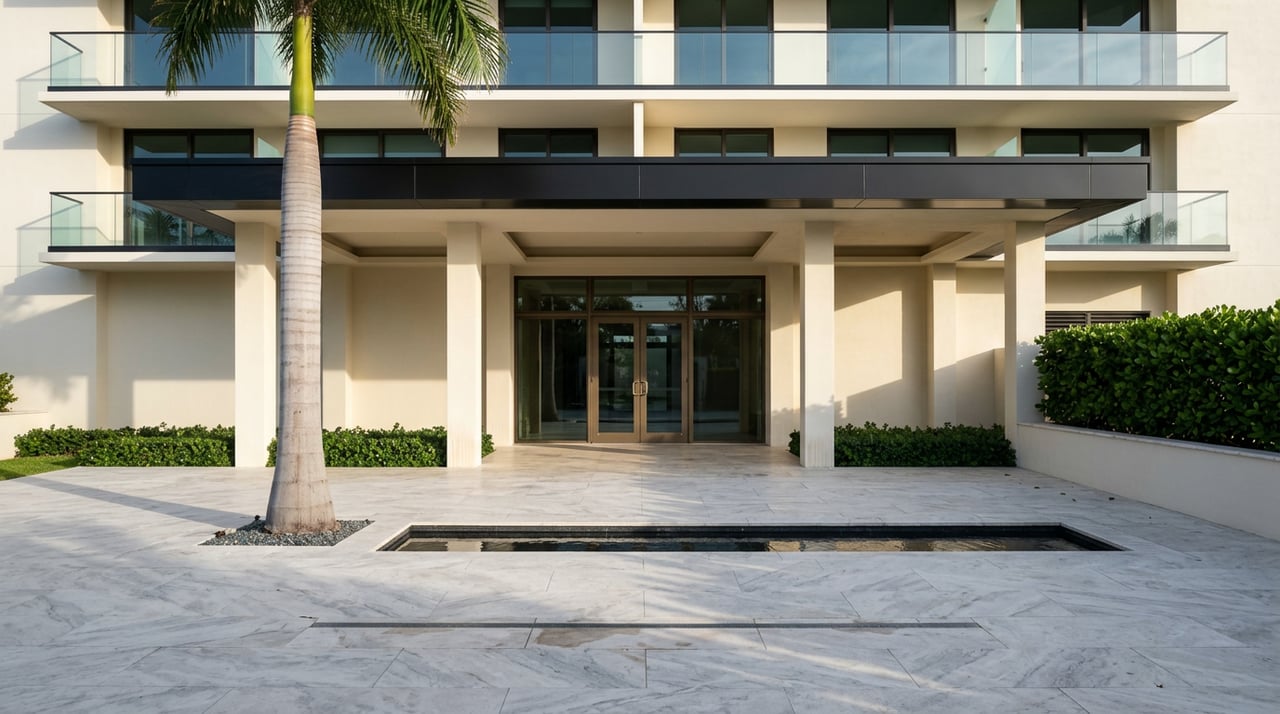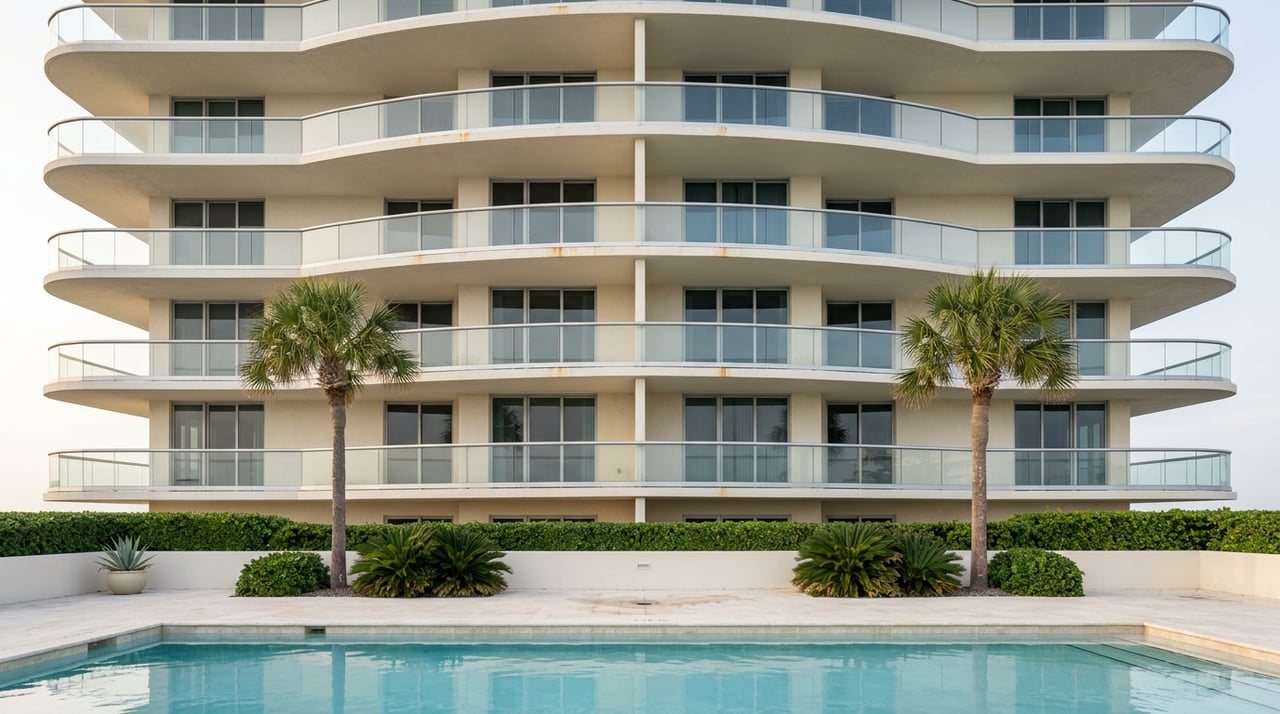
Eighteen units. A 77-year-old waterfront building in Fort Lauderdale. An evacuation order over structural concerns, a repair estimate near $4.5 million, and an ending that had nothing to do with a renovation: the whole property, Springbrook Gardens, went on the market as a teardown, priced at $23 million for whoever wanted to start over with a new residential building or a hotel instead.
Nobody who bought a unit there decades ago signed up for that outcome. But the paperwork that would have flagged the risk years earlier existed the entire time, sitting in board minutes and engineering files that most buyers never think to ask for, because the document everyone does ask for at closing was never designed to show it.
That's the gap worth understanding if you're buying or selling a condo in Fort Lauderdale right now, particularly along a corridor like Galt Ocean Mile, where 1970s concrete towers sit beside recently renovated buildings and brand-new construction, sometimes on the same block. Two units can carry the same price per square foot and completely different futures, and the closing file most people rely on won't tell you which is which.
Two Documents, Two Different Questions
Every Florida condo resale runs through an estoppel certificate. It's the document title companies chase because it has real legal teeth: once requested, the association must deliver it within 10 days, the prep fee is capped at $299, and it's valid for 30 days if delivered electronically or by hand, 35 if mailed. It answers one question cleanly: what is owed on this unit right now, and through what date.
What it doesn't answer is what's coming. That's a separate document, or really a separate file. Florida law requires sellers of existing condo units to hand buyers a resale disclosure packet that includes the declaration, bylaws and rules, the most recent financial statement and budget, and, since the post-Surfside reforms, the association's Structural Integrity Reserve Study or a written statement that none exists yet, plus a milestone-inspection summary if the building has had one. That packet is where the real underwriting happens. It rarely gets the same automatic attention the estoppel certificate does, because no title company's closing checklist forces the question the way it forces the estoppel request.
That asymmetry is the actual mechanism behind stories like Springbrook Gardens. A building can be current on its estoppel certificate, no liens, no delinquent assessments, right up until the year the deferred structural bill finally arrives all at once.
Why This Shows Up On Galt Ocean Mile Specifically
Galt Ocean Mile has been a fixture of Fort Lauderdale's oceanfront since the neighborhood's founding a century ago, and today it's genuinely dense with luxury towers worth a combined fortune, according to the Galt Mile Community Association's own description of the corridor. What that same description makes clear is that the mile is a mix of eras: older icons standing next to renovated buildings and newer boutique towers, all competing in the same price band for the same buyers.
That mix is exactly what makes the document gap dangerous here. A 1970s tower and a recently renovated one can list at similar prices per square foot, and a buyer comparing the two on price alone has no way of knowing that one association has been fully funding its reserves for years while the other only started because the law finally forced it to. Florida condo boards lost the ability to vote to waive Structural Integrity Reserve Study funding once their budgets were adopted on or after January 1, 2025, and as of January 1, 2026, every association still had to begin funding to its study's schedule, including the ones that had spent years voting to underfund reserves under an older budget. Buildings whose boards waived those reserves the longest are the ones catching up from furthest behind right now, and that catch-up shows up as a special assessment, not as a line in the listing.
What Counts As New Doesn't Mean What Counts As Exempt
It's tempting to assume a brand-new Fort Lauderdale tower sidesteps all of this, and it's only half true. The state's milestone inspection requirement is triggered by a building's age, generally 30 years from its certificate of occupancy, or 25 along the coast where local jurisdictions like Broward County have chosen to apply that earlier threshold. New towers won't face that clock for decades.
The Structural Integrity Reserve Study requirement is different. It's triggered by height, not age. Any condominium three or more habitable stories tall needs one on file, whether it closed last year or in 1979. That means new luxury construction on Las Olas and the beach, buildings like 100 Las Olas, Andare Residences, St. Regis Residences Bahia Mar, and Auberge Beach Residences & Spa, still needs a completed SIRS somewhere in its records. It should be a clean, uneventful document for a new building, but a buyer who assumes new construction means no paperwork to check is skipping a question that's still legitimately theirs to ask.
The Actual Request List
For anyone under contract or about to be, the practical version of all this comes down to a short list of documents worth requesting from the seller or association before removing any inspection or financing contingency:
- The declaration, bylaws, rules, and any amendments
- The most recent annual financial statement and adopted budget, along with the date that budget was adopted
- The Structural Integrity Reserve Study, or written confirmation that none has been completed yet and why
- The milestone-inspection summary, if the building has reached the age that triggers one
- The turnover-inspection report, if the building converted from developer to owner control
- Recent board meeting minutes, ideally the last year or two, read specifically for any mention of a repair, bid, or assessment discussed but not yet formally adopted
The estoppel certificate still matters. It's still the fastest way to confirm nothing is currently delinquent on the unit itself. It just isn't the document that tells you whether the building is heading into a special assessment next year, and that's the question that actually determines what a Fort Lauderdale condo costs to own over time, not just to close on.
Buildings with 25 or more units are now required to post their governing documents, budgets, and reserve studies to a website or app, a transparency rule that took effect at the start of this year. That makes the request easier than it used to be. It doesn't make it automatic. Someone still has to ask.
What This Would Have Changed
Go back to Springbrook Gardens. An estoppel certificate from that building, requested at any point before the evacuation, would have come back clean. No delinquency, no lien, a routine document doing exactly what it's designed to do. The file that would have told a different story was the one almost nobody thought to request from a 77-year-old building whose reserves may not have kept pace with what its concrete actually needed.
That's the real lesson for a Fort Lauderdale condo purchase in 2026, whether it's an older tower on Galt Ocean Mile or a new one on Las Olas. The price tells you what the seller wants today. The estoppel certificate tells you what's owed today. Only the reserve study and the milestone file tell you what tomorrow is likely to cost, and that's the one worth asking for by name.
Frequently Asked Questions
Does a brand-new Fort Lauderdale condo tower still need a Structural Integrity Reserve Study? Yes. The SIRS requirement applies to any condominium three or more habitable stories tall, regardless of when it was built. Age only determines when a milestone inspection kicks in, generally 30 years from the certificate of occupancy, or 25 in coastal jurisdictions that have adopted the earlier threshold.
How long is a Florida estoppel certificate good for once it's issued? Thirty days if it's delivered electronically or by hand, 35 days if it's sent by regular mail. If new information comes to light within that window, the association can issue an amended certificate at no additional charge, and the clock resets from the date of the amendment.
What if the seller's association hasn't finished its SIRS yet? Associations existing before July 1, 2022 were generally required to complete an initial SIRS by December 31, 2025, unless they also had a milestone inspection due by December 31, 2026, in which case the two can be completed together on that later timeline. If a seller can't produce a completed study, ask directly where the building stands on that coordinated deadline and request the written statement the law requires in its place.
Buying or selling on Galt Ocean Mile, Las Olas, or anywhere else along Fort Lauderdale's waterfront comes down to reading the right file, not just the listing. The CBG Luxury Team works these buildings and these documents every week. Who You Work With Matters. Schedule a private consultation before you write, or accept, an offer.