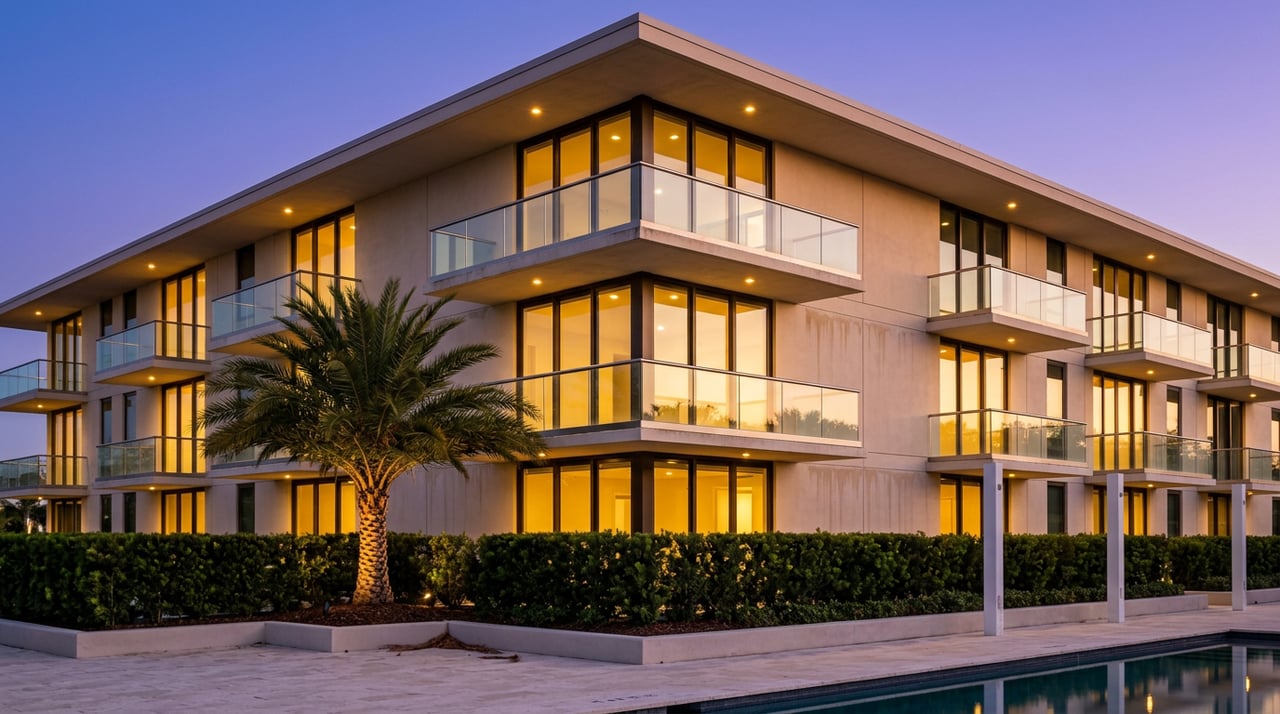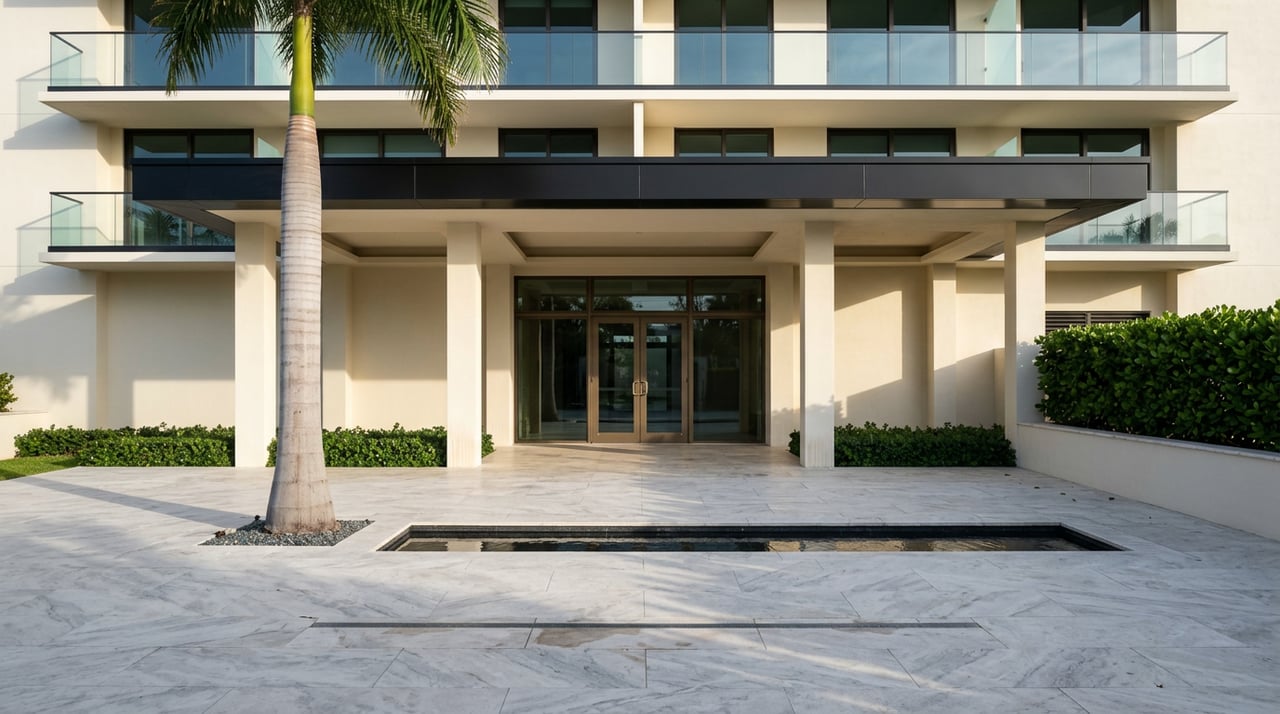
The Real Deal reported that two buyers signed a purchase agreement for a condominium at the Mandarin Oriental Residences in Boca Raton in 2022. Their contract set a firm completion date of December 31, 2025, and they wired a $2 million deposit against it. The building missed that date. This summer, a Palm Beach County Circuit Court judge ruled in the buyers' favor, awarding them a $2 million judgment against the developer's affiliate, Via Mizner Owner III, and allowing them to demand payment directly from the title companies holding their escrow funds.
Those buyers are not alone. Thirteen buyers have now filed suit against Via Mizner Owner III over missed delivery deadlines at the project, first announced by Penn-Florida Companies back in 2015 with a promised 2017 opening. Only one of those suits has produced a judgment so far. Another couple settled for $2.1 million, with a lis pendens remaining on their unit until they're paid. The rest are still working through the courts. And in July, a lending group affiliated with Apollo Global Management filed a $417.7 million foreclosure lawsuit against the developer, citing missed interest payments, a defaulted loan maturity, and a blown February 2025 completion deadline.
If that foreclosure proceeds, buyers are expected to recover the portion of their deposits that was actually held in true escrow. Recovering anything beyond that, the money that was released to fund construction, is a much harder fight. That distinction, between what sat untouched and what got spent, is the entire story. And it's the number every Boca Raton buyer evaluating a pre-construction contract this year should understand before their attorney ever opens the purchase agreement.
The Line Every Contract Draws at 10 Percent
Florida condominium law sets a hard floor. Under the statute governing developer sales, the first 10 percent of a unit's purchase price must sit in an escrow account, untouched, until closing. That protection is close to absolute. What happens above that 10 percent is a different conversation entirely. A developer can write a contract that allows anything collected beyond the first 10 percent to be spent on actual construction costs, and once that language is in the agreement and disclosed, the money is fair game the moment it clears escrow.
This is why the size of a deposit tells you almost nothing on its own. What matters is how much of that deposit sits above the 10 percent line, and whether the contract lets the developer draw on it before the building is finished.
Two Buildings, Two Very Different Bets
Penn-Florida reported that Mandarin Oriental Residences' launch structure asked buyers for 20 percent at contract signing and another 10 percent at groundbreaking, a total of 30 percent collected long before delivery. That schedule was pitched at the time as lighter than the 50 percent deposits common on Miami towers, and on paper it looked like the friendlier deal. But 20 points of that 30 percent sat above the statutory 10 percent floor, which meant it was eligible to be drawn down for construction if the contract said so. As the project ran years behind schedule, that's exactly what happened to at least some buyers' funds.
Compare that to how ALINA structured its second-phase towers downtown. Million Luxury described public marketing for ALINA 210 and 220 as a two-step schedule: 40 percent at contract, 60 percent due only at closing. The first number looks larger and, to a buyer scanning percentages, riskier. But the second half of that structure, 60 cents of every dollar, never leaves the buyer's account until the building exists and the sale actually closes. There's no multi-year window where that money can be spent on drywall and steel while the tower is still a hole in the ground.
| Structure | Collected before delivery | Amount above the 10% escrow floor |
|---|---|---|
| Mandarin Oriental (as originally marketed) | 30% | 20% |
| ALINA Phase Two (210, 220) | 40% at contract, remainder at closing | Up to 30% depends on contract terms, but 60% isn't paid until the building is done |
Why the Same Rule Produces Different Outcomes
The lesson isn't that one developer wrote a worse contract than another. It's that the same 10 percent statutory floor produces completely different exposure depending on when the rest of the money changes hands. A schedule that front-loads collection years ahead of delivery puts a large share of buyer capital at risk for the entire construction period, no matter how the total percentage compares to a neighboring tower. A schedule that defers the bulk of the payment to closing keeps that capital out of harm's way by definition, because it simply hasn't been handed over yet.
For a project that has now stretched past a decade since its 2015 announcement without full delivery, as Mandarin Oriental has, that gap compounds. Every year the completion date slips is another year the released portion of a buyer's deposit is doing construction financing duty instead of sitting in an account with the buyer's name on it.
What to Ask For Before You Sign in 2026
Boca Raton's downtown core has more active pre-construction inventory right now than it's had in a decade. Mr. C Residences launched sales this spring with a 133-unit tower priced from $1.7 million and marketed by Douglas Elliman Development Marketing. Glass House is under construction on Palmetto Park Road with a 28-unit collection targeting delivery around 2027. 327 Royal Palm offers 24 residences closer to the beach. Each of these projects will present a deposit schedule, and none of them are obligated to structure it the same way.
Before signing at any of them, ask for four specific things in writing:
- Confirmation of the exact escrow account and institution holding your funds, and written language stating whether any portion above 10 percent can be released for construction before closing.
- The contract's force majeure and delivery-date remedy language, including how many months of delay are excusable and what happens to your deposit if the developer invokes it.
- Whether the 15-day rescission window under Florida's condominium statute has actually started running. That clock doesn't begin at signing. It begins once every required disclosure document, including the declaration of condominium, bylaws, and the most recent financial statement, has been delivered to you.
- Whether a second rescission window applies. If a developer later issues an amendment that materially changes the offering in a way that hurts you, Florida law can hand you a fresh 15-day right to walk away, separate from the one you had at signing.
None of these four questions will slow down a legitimate sale. A serious developer's counsel can answer all of them in a single call. If the answers are vague or the deposit schedule front-loads a large share of the price years before a shovel goes in the ground, that's information worth having before you wire anything.
Frequently Asked Questions
Does a smaller deposit percentage always mean less risk? No. What matters is how much of the total deposit sits above Florida's statutory 10 percent escrow floor and how early that excess is collected relative to the delivery date. A 30 percent schedule collected over two years carries different exposure than a 40 percent schedule where most of it is deferred to closing.
Can a developer really spend part of my deposit before the building is done? Yes, if the contract permits it. Florida law protects the first 10 percent of the purchase price in every developer sale. Anything a buyer pays above that threshold can be used for actual construction costs if the purchase agreement authorizes it and discloses that clearly.
If a project stalls for years, is any of my money safe? The 10 percent held in true escrow is generally recoverable, assuming it was actually deposited as required. Recovering funds released above that floor depends entirely on what the contract said, what actually happened to the money, and whether a rescission right was available and exercised in time.
Boca Raton's next wave of branded towers will keep drawing buyers who want the address, the amenities, and the story. The contract terms behind that story deserve the same scrutiny as the floor plan. If you're weighing a pre-construction purchase in Via Mizner, downtown, or anywhere else in Boca Raton this year, The CBG Luxury Team can walk you through the deposit schedule line by line before you sign. Who you work with matters. Schedule a private consultation.
This article is general information, not legal, tax or financial advice. Consult a qualified professional about your situation.