Choosing between a storied Palm Beach estate and a newly built home is not just about style. It is about how you want to live, what kind of upkeep you are comfortable with, and how much flexibility you want if you plan to update the property over time. If you are weighing character against convenience in one of South Florida’s most architecturally defined markets, this guide will help you understand the tradeoffs clearly. Let’s dive in.
Palm Beach character starts with preservation
Palm Beach stands apart because its historic identity is actively protected. The Town adopted its Historic Preservation Ordinance in 1979, and it says more than 328 landmark properties, sites, and vistas are currently protected.
That matters when you shop the market. In Palm Beach, a home is not considered significant based on age alone. According to the Town, landmark significance can come from historical association, architectural distinction, or connection to a master architect or craftsman.
Historic estates have a distinct design language
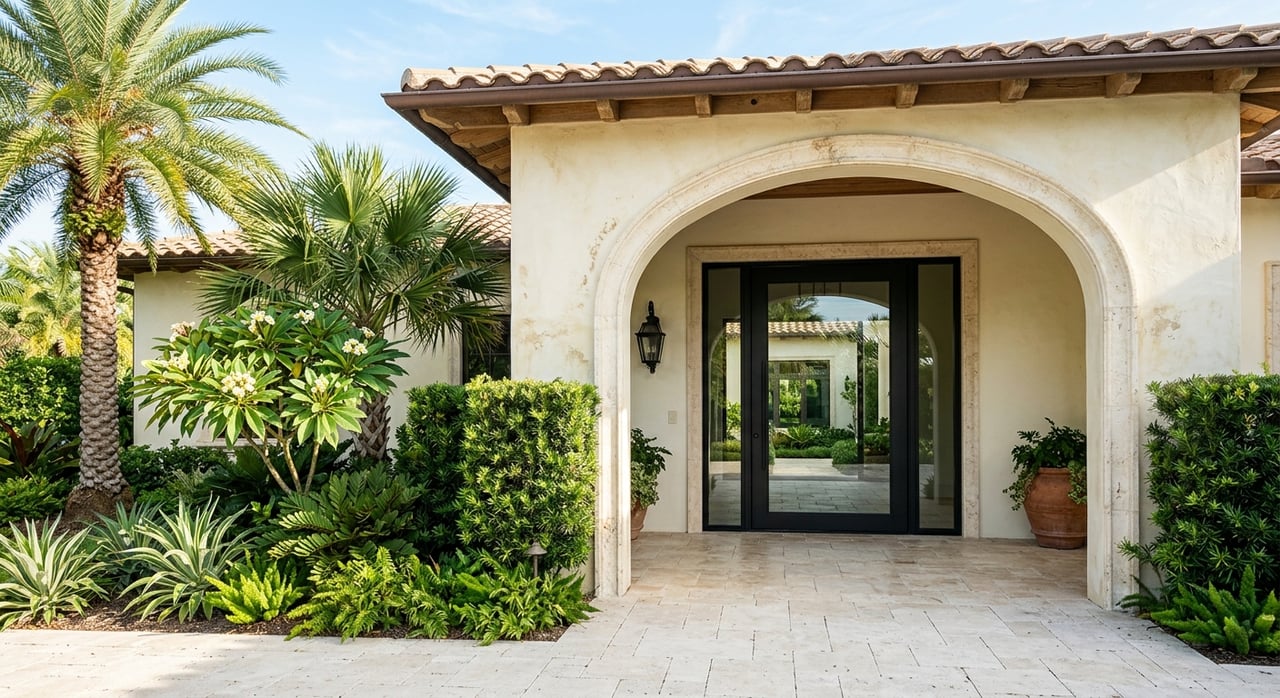
For many buyers, the appeal of a historic estate begins the moment they arrive. Palm Beach’s visual identity is closely tied to architects such as Addison Mizner, Marion Sims Wyeth, and John Volk, whose work helped shape the island’s architectural vocabulary.
You often see details that feel hard to replicate in newer homes, including:
- Spanish-colonial motifs
- Red roof tiles
- Cast stone elements
- Wrought iron details
- Patterned ceramic tile
- Covered terraces and fountains
These homes were also designed with climate in mind. Mizner’s houses often used high ceilings, fans, stuccoed and tiled walls, aligned windows for cross-ventilation, and deep terraces to support passive cooling.
What buying historic can mean for you
A historic estate can offer a level of texture and presence that feels deeply tied to Palm Beach. If you value original architecture, layered materials, and homes with a sense of authorship, this segment can be especially compelling.
At the same time, ownership often comes with a stewardship mindset. The charm is real, but so is the responsibility to preserve key features and navigate a more structured review process when exterior work is involved.
Renovating a historic Palm Beach home
If you are considering updates, it helps to know that Palm Beach uses two separate review bodies. ARCOM reviews new construction and exterior modifications visible from public rights-of-way for non-landmarked homes, while the Landmarks Preservation Commission handles landmarked properties and other historic work.
For landmarked properties, exterior renovations and additions require LPC approval. The Town’s Landmarks Manual says interior kitchen and bath work generally does not require that approval unless the work adds or removes windows or doors, or changes the overall square footage.
Routine repairs can be simpler. Ordinary maintenance or repairs that do not change the design or outward appearance do not require a Certificate of Appropriateness.
Windows, doors, and shutters need attention
In Palm Beach, windows, doors, and shutters receive close scrutiny. The Town’s current permitting guidance says these items require design review and may also require ARCOM or LPC approval depending on the scope of work.
The same guideline says applications must be supported by product approvals and design-wind-load documentation. For buyers, that means replacement plans should be evaluated early, especially in older homes where preserving appearance and meeting current requirements may both matter.
Not every older home is landmarked
This is an important distinction. Not every older Palm Beach home is automatically a landmark, and not every building inside a historic district must qualify individually.
That said, historic districts and historically scenic areas are designed to protect concentrated groups of significant structures. If you are comparing two older homes, their review path and future renovation flexibility may be very different depending on landmark status and location.
Additions are possible, but compatibility matters
Buying historic does not always mean freezing a home in time. The Town’s manual says additions are permitted, but they must remain compatible with the original structure and surrounding streetscape.
In practical terms, that can shape everything from massing to exterior materials. If your long-term plan includes expansion, it is worth reviewing that path before you make an offer.
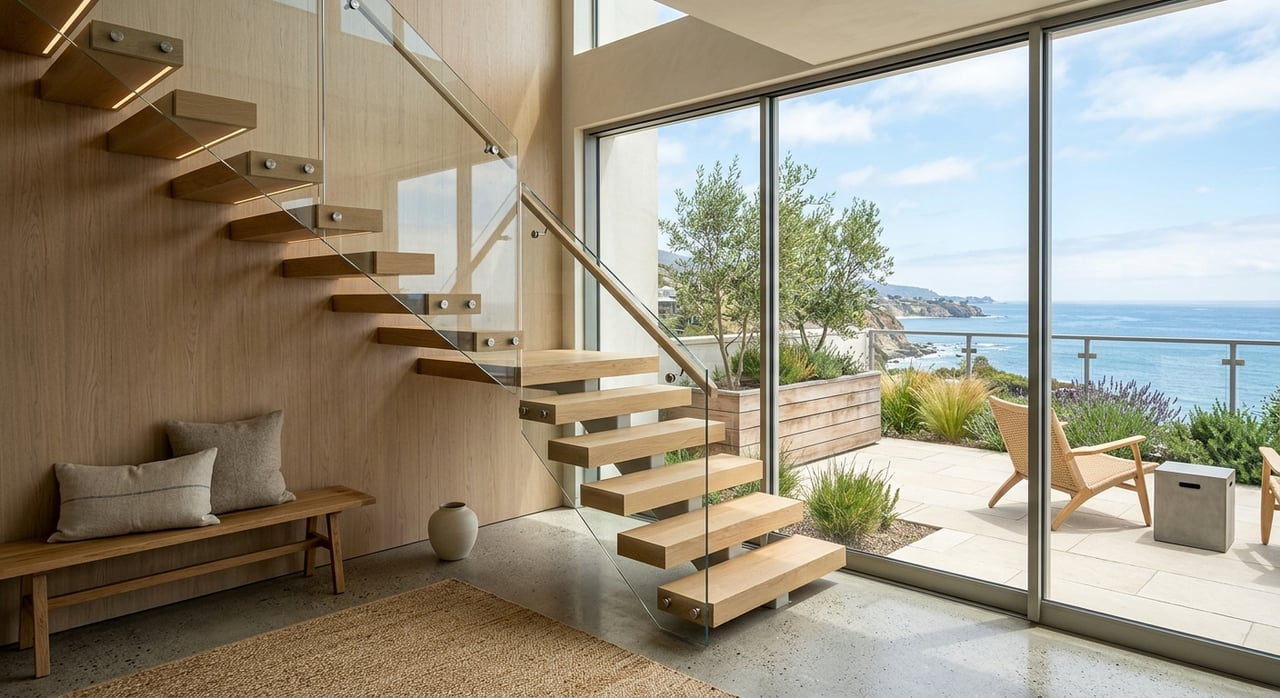
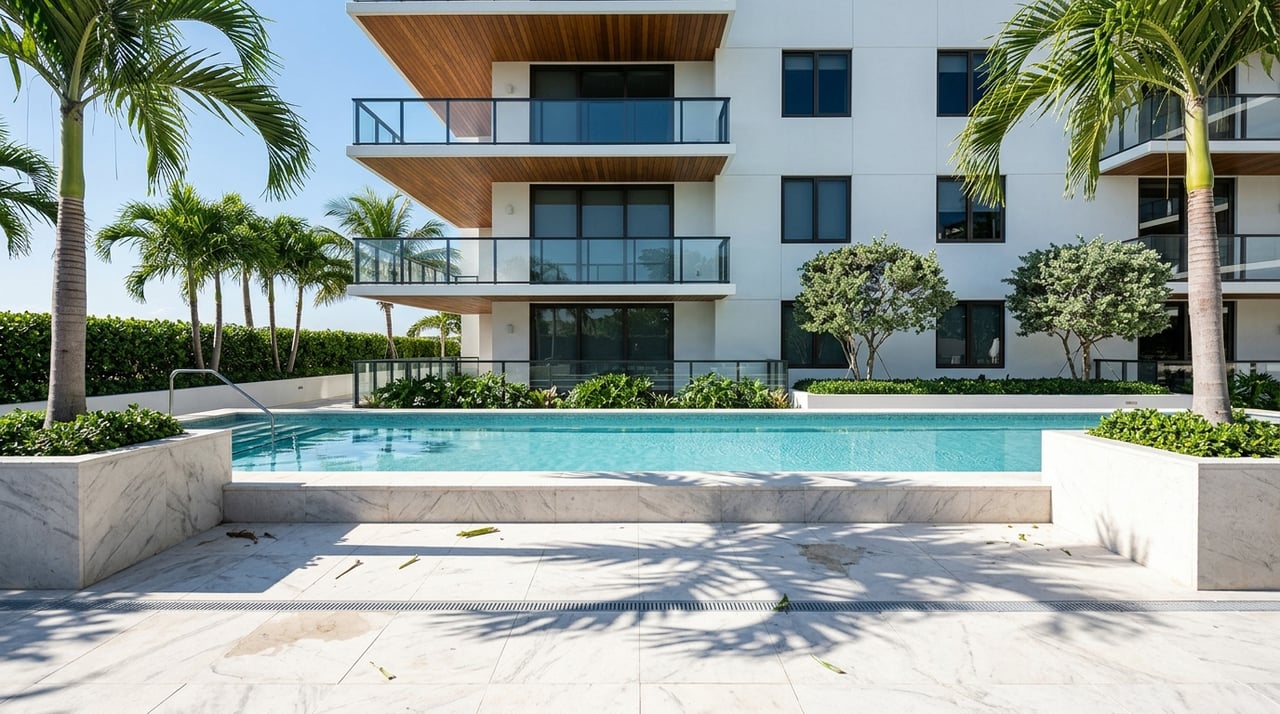
Modern new construction offers a different kind of ease
New construction in Palm Beach starts from a newer technical baseline. Florida’s current building code is the 8th Edition (2023), effective December 31, 2023, and Palm Beach’s permitting guidance references current-code product approvals.
For many buyers, that creates a cleaner path to contemporary functionality. Newer homes may be better positioned to incorporate current building-envelope standards, impact-opening systems, HVAC performance, and smart-home features, although specifics still depend on the individual property.
New does not mean unrestricted
One common misconception is that a new Palm Beach home can be designed without much context. In reality, the Town’s zoning code regulates setbacks, height, lot coverage, massing, and landscape open space.
The Landmarks Manual also says new construction should conform to the prevailing architectural design and rhythm of the neighborhood, block, or district. So while a new home may offer modern planning and cleaner systems, it is still expected to fit the town fabric.
Why some buyers prefer new construction
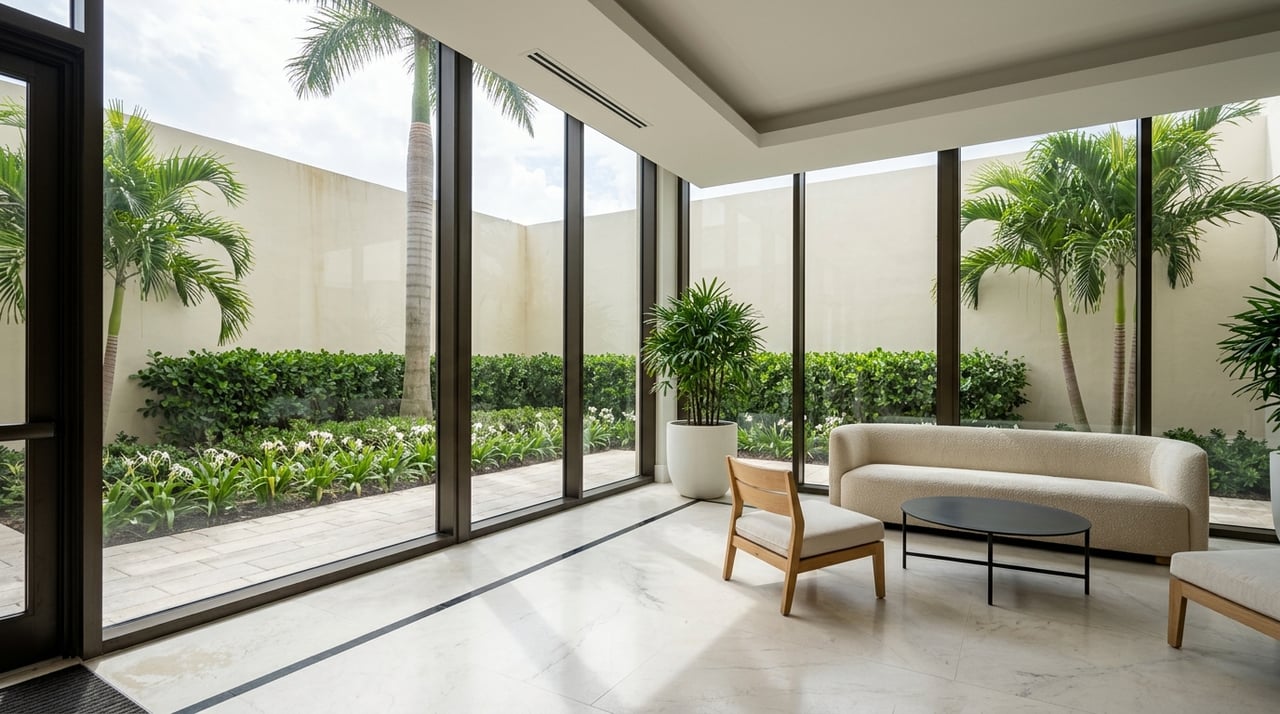
If you want a more turnkey ownership experience, modern construction may feel more straightforward. You may have fewer legacy systems to evaluate and a more current baseline for openings, mechanicals, and overall performance.
This route can also appeal if your priorities include technology integration, simplified maintenance planning, and a layout designed around contemporary indoor-outdoor living. In Palm Beach, however, even highly custom new builds may feel more controlled than buyers expect because of the Town’s review structure.
Coastal ownership affects both choices
Whether you buy historic or new, Palm Beach’s coastal setting affects the ownership experience. The Town says its FEMA flood insurance rate maps were updated effective December 20, 2024, and it notes that Palm Beach is a Class 6 NFIP Community Rating System community, which gives NFIP flood policies a 20% annual discount.
The Town also reminds owners that standard homeowners insurance does not cover flood damage. That makes flood zone review and insurance planning essential before you move forward on any property.
Salt air and moisture are long-term factors
Coastal conditions are not just about flood maps. FEMA’s coastal construction guidance notes that salt spray and moisture frequently lead to corrosion and decay of building materials in coastal environments.
That means both older and newer homes need regular attention to exterior metals, fasteners, sealants, roof edges, and water management. Newer construction is not maintenance-free, and historic homes are not the only properties that need careful upkeep.
Historic homes may have added structural considerations
Palm Beach’s Landmarks Manual notes that much of the island was reclaimed land. Because of that, some historic homes can have foundation and settling issues that deserve careful review.
The manual advises repairing and stabilizing weakened structural members where damage or inadequacy is present. If you are evaluating an older estate, this is one more reason to study records, inspections, and prior work closely.
A practical way to compare the two
If you are deciding between historic and new construction, it helps to frame the choice around your ownership style.
Historic estates often suit buyers who value architectural character and are comfortable treating maintenance as part of stewardship. Modern new construction often suits buyers who prefer fewer legacy systems and a more code-aligned path to technology and efficiency.
Neither option is universally better. The right fit depends on whether you are drawn more to design heritage and patina, or to performance, convenience, and a more contemporary starting point.
What to verify before making an offer
Before you move ahead on either property type, a careful review can save time and prevent surprises later. In Palm Beach, due diligence should go beyond finishes and floor plans.
Here is a practical checklist to keep in mind:
- Verify landmark status
- Review permit history
- Confirm flood zone information
- Understand insurance implications
- Check the age and condition of the roof
- Review windows and doors
- Evaluate HVAC, plumbing, and electrical systems
- Look at drainage and other coastal-exposed components
For landmarked homes, you should also confirm whether prior exterior changes received LPC approval where required. That step can be especially important when a property has been updated over time.
The Palm Beach decision comes down to lifestyle
In Palm Beach, the difference between a historic estate and a modern new construction home is about more than old versus new. It is a choice between two distinct ownership experiences, each shaped by the Town’s design standards, coastal conditions, and architectural culture.
If you want help weighing those tradeoffs property by property, working with an advisor who understands both the design story and the practical review process can make your search far more efficient. When you are ready to explore Palm Beach estates or new construction opportunities with a tailored strategy, connect with Scott Gerow & Rachelle Beresh.
FAQs
What makes a historic Palm Beach estate different from an older non-landmarked home?
- A historic Palm Beach estate may be landmarked or otherwise historically significant based on architectural distinction, historical association, or connection to a master architect or craftsman, while an older home is not automatically landmarked just because of its age.
What approvals are needed to renovate a landmarked Palm Beach home?
- The Town’s Landmarks Preservation Commission reviews exterior renovations and additions to landmarked properties, while some interior kitchen and bath work generally does not need LPC approval unless it changes windows, doors, or overall square footage.
What does Palm Beach review for windows, doors, and shutters?
- Palm Beach requires design review for windows, doors, and shutters, and depending on the scope of work, the project may also need ARCOM or LPC approval along with product approvals and design-wind-load documentation.
Why do some buyers prefer modern new construction in Palm Beach?
- Many buyers prefer modern new construction because it starts from a newer code baseline and may offer a cleaner path to current systems, impact openings, HVAC performance, and smart-home features.
Does new construction in Palm Beach still face design rules?
- Yes, new construction in Palm Beach is still regulated for setbacks, height, lot coverage, massing, landscape open space, and overall compatibility with the surrounding neighborhood context.
What should buyers check before buying a Palm Beach historic or new home?
- Buyers should verify landmark status, permit history, flood zone, insurance implications, and the age and condition of the roof, windows, HVAC, plumbing, electrical systems, drainage, and other coastal-exposed components.