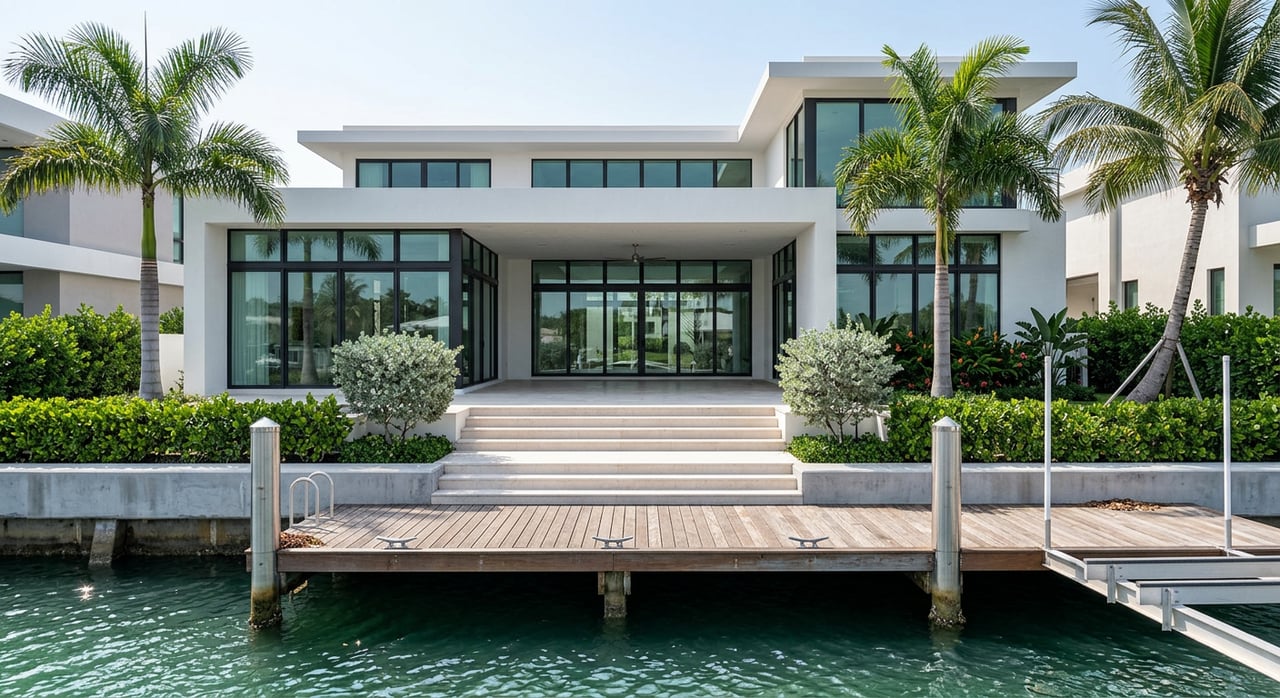
If you own a yacht or plan to, Fort Lauderdale should be on your short list. The city blends a deep-water inlet, extensive canals, and a dense marina network that makes day runs, service, and longer passages easier. You want a home that fits your boat and your lifestyle, and you also want clarity on routes, bridges, and permits. In this guide, you’ll learn which neighborhoods work best for different vessel sizes, what to verify before you buy, and how to align your dock with your cruising plans. Let’s dive in.
Why Fort Lauderdale works for yachts
Few U.S. cities match Fort Lauderdale’s boating infrastructure. The city promotes about 165 miles of inland waterways, which is why many call it the Venice of America. That network connects to Port Everglades, the area’s deep-water gateway, so you can access the Atlantic with minimal delay. For larger vessels, this combination is a major advantage.
Proximity to Port Everglades matters for both safety and convenience. The Port’s Harbor Improvements program cites an existing outer entrance channel depth around 45 feet MLLW, with plans to deepen and widen key reaches to better serve larger commercial and private vessels. If you keep a large motor yacht or plan longer voyages, being near a deep, well-managed inlet is a real plus.
The Atlantic Intracoastal Waterway through Fort Lauderdale has seen targeted deepening in key sections to roughly 15 to 17 feet MLW. Depths vary with location and season, so always confirm the controlling depths for your route. The takeaway is simple: this market works well for big boats because navigation upgrades and marina capacity support them.
- Learn more about the city’s 165 miles of waterways from Visit Lauderdale.
- Review the Port Everglades Harbor Improvements and channel details before planning routes.
- Note recent ICW projects that targeted roughly 15 to 17 feet MLW in key areas.
Best neighborhoods for yacht owners
Every canal, basin, and route is different. Use the sections below as high-level guidance, then verify specifics for any property you consider.
Las Olas Isles and Seven Isles
These barrier-island finger isles sit just off Las Olas Boulevard near the Intracoastal. They were designed for waterfront living, which is why many homes market private dockage. You are close to the beach, adjacent marinas, and provisioning, which makes quick ocean runs easier when conditions allow.
Vessel fit: Owners often keep mid to large motor yachts at private docks here. Canal depth at MLW, turning room, and the exact route to Port Everglades vary by lot, so treat any advertised dock length as a starting point only. When set up well, this area checks a lot of boxes for dock-at-home convenience.
What to verify on a listing:
- Deeded riparian rights vs. only upland ownership.
- Recent MLW soundings for the dock and approach, including who performed them and when.
- Seawall condition, height, and permit history.
- Whether the route passes through slow or no-wake zones that affect timing.
Harbor Beach and Harbour Isles
This ocean-peninsula neighborhood sits south of Las Olas with wide basins and direct access toward Port Everglades. Many owners choose it for large-yacht capability and short runs to open water. You are near Pier Sixty-Six, which adds access to deep-water face docks, high-amp shore power, and services.
Vessel fit: Large motor yachts are common. Whether a single-family property can host very large vessels depends on basin geometry, depth at MLW, and turning room. For 100 to 300-plus foot yachts, professional marina berths or face docks are often the practical choice.
What to verify on a listing:
- Basin width, turning radius, and approach geometry for your LOA and beam.
- Underkeel clearance at MLW to the dock and along the approach.
- Any drawbridge constraints or timing that might influence departures.
- Availability of high-amp shore power at home vs. at nearby marinas.
Rio Vista, Tarpon River and Sailboat Bend
These river neighborhoods sit just west and south of downtown along the New River and the Intracoastal reach. They offer a more sheltered, residential feel with calmer moorings. You stay close to downtown and the Riverwalk while still enjoying protected dockage.
Vessel fit: Mid-size motor yachts and sport boats tend to work well here. Canals and turning areas can be tighter than the beachside basins, so captains often limit LOA and beam compared with barrier-island neighborhoods. Pay close attention to bridge profiles along the New River.
What to verify on a listing:
- Full bridge list from the dock to the inlet, including closed clearance and opening rules.
- Turning basins and fairway widths that match your boat-handling comfort.
- Any local speed or no-wake zones along the New River segment you will use.
- Dock and seawall condition plus any existing permits or variances.
Coral Ridge and Coral Ridge Isles
Located north of central Fort Lauderdale, this area offers larger lots and a balance between land and water access. Many routes avoid multiple fixed bridges, depending on the exact canal and property location. If you want more space on land with reasonable boating access, this area is worth a look.
Vessel fit: Mid to larger yachts can work depending on the lot and route. Depths and bridge profiles vary by canal, so route-plan from each specific property. As always, confirm soundings, turning room, and any municipal constraints before you assume large-yacht capability.
What to verify on a listing:
- Exact route to the inlet, including every bridge and its operation.
- Canal depth at MLW along the entire approach, not just at the dock.
- Seawall elevation relative to current local standards and resilience goals.
- Shore power availability and space for lifts or tenders if permitted.
Ocean runs, bridges and air draft
Shortest ocean runs often come from the barrier-island isles and beachside peninsulas that approach Port Everglades and the 17th Street Causeway. Actual time depends on your speed, bridge openings, and local speed zones. For tall towers or masts, the set of bridges on your path becomes a gating factor.
- The 17th Street Causeway is known for a high clearance profile when open and sits adjacent to Pier Sixty-Six, which many large yachts use for staging.
- Always compile a route-specific bridge list that includes closed clearances, opening schedules, and VHF channels, and confirm the datum used for stated clearances.
- Drawbridge operation is governed by federal rules. For a first run, review references and speak with bridge tenders to avoid surprises.
Marinas and service hubs to know
Large yachts often mix home dockage with professional berths for heavy service, power, fueling, and staging. Fort Lauderdale has a cluster of top-tier facilities that can simplify ownership.
- Lauderdale Marine Center. This is a major refit and repair hub with heavy-lift capacity, covered sheds, and an extensive subcontractor network. If your yacht will need periodic haul-outs or upgrades, LMC is a core resource.
- Pier Sixty-Six Marina. The marina markets 5,000 linear feet of deep-water dockage, high-amp shore power, and quick access to the inlet. It is a go-to for transient superyachts and local owners who want reliable services.
- Bahia Mar and the Las Olas marina corridor. This area is central for provisioning and transient dockage, especially during the Fort Lauderdale International Boat Show each fall. The show concentrates activity and services in one walkable zone.
- Dania Cut shipyards and Harbour Towne area. Just south of Port Everglades, this shipyard cluster includes Derecktor Dania, which extended piers to handle vessels up to about 220 feet LOA. The area regularly manages major refits and haul-outs for yachts that do not remain at private docks.
Permits, seawalls and environmental checks
Dock work and waterfront improvements in Florida involve layered approvals. Understanding the framework early can save time and reduce risk.
- Sovereign submerged lands and state authorization. Many private docks extend over state-owned submerged lands, which can require authorization from the Florida Department of Environmental Protection. Review recorded riparian rights, any prior Letters of Consent or leases, and permit files before assuming expansion is possible.
- Environmental protections. Manatee protection, seagrass mapping, and related rules can limit dock size, dictate pile locations, or require work windows and mitigation. Early mapping and design review will help you avoid delays.
- Local seawalls and resilience. Fort Lauderdale has active seawall and waterfront resilience initiatives that may affect construction standards and elevations. Request recent seawall inspections, and review permit histories for any improvements or variances.
Buyer checklist for dock-first shopping
Use this quick list to turn daydreaming into due diligence.
- Confirm water-side rights. Verify deeded riparian rights, any submerged land leases, and prior FDEP authorizations or approvals tied to the property.
- Get recent soundings. Request up-to-date MLW soundings for the dock and approach. Confirm the survey date, datum, and who performed the work. If documents are outdated, arrange a pre-offer sounding.
- Build your bridge list. Record every fixed and drawbridge from the dock to the inlet with closed clearances, opening schedules, and VHF channels. Confirm local restrictions before your first run.
- Measure turning room. Evaluate canal width and turning basins for your LOA and beam. If the geometry is tight, factor in captain assistance or tug and lines for routine moves.
- Map service access. Identify the nearest high-amp shore power, fuel options, pump-outs, and the closest yard that can haul your vessel’s size. Many owners keep a tender at home and stage the larger yacht at a professional marina when needed.
- Plan for insurance and storms. Insurers weigh dock condition, seawall height, and haul-out plans. Pre-arranged haul-out windows at yards with adequate lift capacity can streamline hurricane-season readiness.
Final thoughts
Fort Lauderdale offers a rare mix of ocean access, professional yacht services, and residential waterfront living. If you match the right canal and route to your vessel, you gain a smooth daily routine and a resilient long-term plan. The key is to verify every water-side detail before you buy and to align your home dock with marinas and yards that support your cruising style.
When you are ready to refine neighborhoods, map routes, and verify dock details, connect with a local advisor who understands yacht ownership logistics. Who you work with matters. For discreet guidance and a tailored search, reach out to Scott Gerow & Rachelle Beresh.
FAQs
Which Fort Lauderdale areas have the easiest ocean access?
- Barrier-island neighborhoods like Las Olas Isles, Seven Isles, and Harbor Beach sit close to the Intracoastal and Port Everglades, which can shorten runs when bridge openings and local speed zones align.
Can I keep a 100-foot yacht at a private dock?
- It depends on the specific lot, canal geometry, and depth at MLW. Many properties market large dockage, but always verify soundings, turning room, and route constraints before making an offer.
How do bridge clearances affect tall towers or masts?
- Air draft drives your route choice. Compile a full bridge list with closed clearances and opening schedules, confirm the datum used for measurements, and contact bridge tenders before your first run.
What permits are needed to build or modify a dock?
- Florida often requires FDEP authorization for work over sovereign submerged lands, and federal or local reviews may apply. Check prior Letters of Consent, leases, and any city permits tied to the property.
Where can I haul out a large yacht nearby?
- Lauderdale Marine Center and Dania-area yards, including Derecktor Dania, are primary options for larger yachts and major refit work. Confirm their lift or pier capacity for your vessel’s LOA and weight.
Visit Lauderdale’s waterways overview, Port Everglades Harbor Improvements, ICW deepening overview, Pier Sixty-Six Marina, Lauderdale Marine Center, Fort Lauderdale International Boat Show, FDEP guidance, Drawbridge operations reference, City seawall and resilience updates, Derecktor Dania capacity.