Fort Lauderdale Home Prices and Market Trends Buyers Should Know
Author: Scott and Rachelle
Fort Lauderdale is one of South Florida's most diverse real estate markets. It spans from the Atlantic coastline through the Intracoastal Waterway and into established inland neighborhoods, covering a wide range of budgets, property types, and lifestyles. The median home sale price in Fort Lauderdale was $575,000 in mid-2026, with homes averaging 99 days on the market, up from 86 days the prior year. That shift in pace gives buyers more negotiating room than they've had in years. This guide covers what buyers need to know about prices, neighborhoods, ownership costs, and how the 2026 market is actually behaving across different parts of the city.
Scott and Rachelle help buyers across the Fort Lauderdale market understand what the data means for their specific situation and goals.
Fort Lauderdale Real Estate at a Glance
- The median list price for single-family homes in Fort Lauderdale reached $799,000 in mid-2026, a separate measure from the median sale price across all property types, which is covered below.
- The median home sale price was $575,000 in mid-2026, essentially flat year over year at plus 0.17%, reflecting a market that has stabilized after years of rapid appreciation.
- Broward County's effective property tax rate is approximately 1.0% to 1.3% of assessed value. Florida has no state income tax, which continues to draw buyers from high-tax states including New York and Illinois.
- The cost of living in Fort Lauderdale is approximately 20% above the national average, driven by housing costs and insurance. Buyers must budget for both wind and flood insurance, which can add meaningfully to monthly carrying costs.
- HOA fees in Fort Lauderdale vary widely. Waterfront condo buildings commonly run $800 to $2,500 per month. Inland single-family gated communities typically range from $200 to $600 per month depending on amenities.
- The best neighborhoods for buyers include Las Olas Isles and Rio Vista for waterfront luxury, Victoria Park for walkable urban living, Coral Ridge for established residential streets and larger lots, and Tarpon River for more accessible entry-level pricing.
What Current Fort Lauderdale Home Prices Mean for Buyers
The Fort Lauderdale market in 2026 is one of the more buyer-friendly it has been in several years. The citywide median home sale price sits at $575,000 in early 2026, reflecting a broader adjustment as inventory and new listings have steadily increased. With 2,532 homes available in the market and 7.8 months of supply, buyers have real options and real leverage in most price segments.
The median home sale price was $575,000 in mid-2026, with homes selling in an average of 99 days, slower than the 86-day average the prior year. That extra time on market is meaningful. It gives buyers a chance to inspect properties thoroughly, negotiate on price and terms, and avoid the pressure-driven decisions that defined the 2021 to 2022 period. The market is not in distress. It is stabilizing, and that's actually a good environment for prepared buyers.
Where Buyers Can Find Different Price Points
Fort Lauderdale's pricing landscape changes significantly depending on which part of the city you're searching in. Buyers on tighter budgets tend to look inland toward neighborhoods like Tarpon River, Edgewood, and parts of downtown's west side, where single-family homes can still be found starting in the $400,000 to $550,000 range depending on condition. Mid-range buyers gravitate toward Victoria Park, Coral Ridge, and Wilton Manors, where the range runs from $600,000 to $900,000 and the lifestyle is more walkable and established.
At the upper end, Las Olas Isles, Rio Vista, and Harbor Beach attract buyers willing to pay $1.5 million to $5 million and above for direct water access, boat docks, and proximity to Las Olas Boulevard's restaurant and retail corridor. The median list price for houses in Fort Lauderdale reached $799,000 in mid-2026, which reflects the strong pull of the waterfront and water-access segments on the overall average.
How Property Type Affects the Purchase Price
The gap between single-family home and condo pricing in Fort Lauderdale tells a clear story about where buyers have the most power right now. The single-family home sector maintains closer to 4.8 months of supply, while the condo market has experienced a surge in available units stretching to nearly 11 months of supply. Median condo prices currently sit around $450,000 to $460,000.
For condo buyers specifically, the current inventory glut is creating genuine opportunity. Sellers are far more willing to negotiate on price, closing costs, and terms than they were two years ago. The tradeoff is that condo due diligence has become more demanding under Florida's updated legislation. Buyers must review building reserves, engineering reports, and any pending special assessments before making an offer, particularly in buildings subject to Florida's milestone inspection law, Senate Bill 4-D. Enacted in 2022, it requires structural inspections at 30 years for most condominium buildings three storeys or taller, or at 25 years for buildings within three miles of the coast, a trigger that covers the large majority of Fort Lauderdale's waterfront condo stock. That extra review is worth doing carefully, because the financial health of the building affects the value of the unit long-term.
Waterfront vs. Inland Homes and What Buyers Pay For
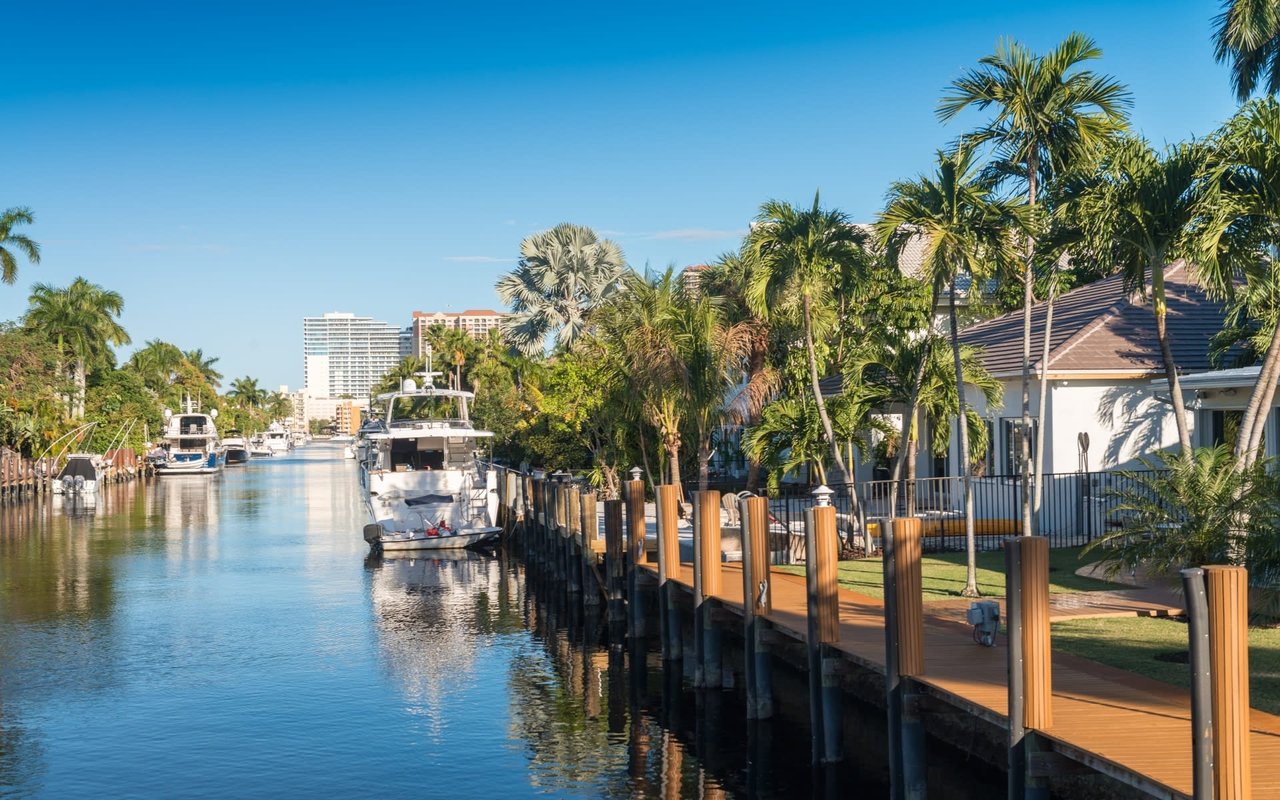
Waterfront is the single most defining price variable in Fort Lauderdale. The city has over 165 miles of navigable waterways, and direct water access with a private dock carries a consistent premium in every neighborhood it exists in. A comparable home on the water versus an interior lot of the same size and condition can differ by $500,000 or more, depending on the specific waterway, the dock configuration, and the view.
Bridge clearance is one of the most important and most overlooked factors in a Fort Lauderdale waterfront purchase: whether a dock sits behind a fixed bridge determines what size vessel can reach open water from it, and "no fixed bridges" is one of the most valuable phrases a waterfront listing can carry in a city that calls itself the yachting capital of the world. Fort Lauderdale has adopted minimum seawall elevation requirements, and bringing an older seawall into compliance is a real cost that falls to the owner. Buyers should ask about a seawall's condition, height, and compliance status alongside the standard inspection items.
Inland homes trade at lower prices per square foot and are generally easier to insure at lower cost because they sit farther from direct coastal exposure. That makes them attractive for buyers who are focused on value per square foot and lower insurance premiums.
Neighborhoods like Coral Ridge and Prospect Lake offer large lots with traditional residential character at prices that are accessible compared to the water-adjacent competition. Buyers working through their options in Fort Lauderdale neighborhoods get a clear view of what specific streets and communities are trading at before they narrow their focus.
What Is Driving Demand in Fort Lauderdale
Demand in Fort Lauderdale has held steady through 2026 despite higher mortgage rates, and the reasons are structural. Florida's zero income tax continues to attract high-net-worth relocators from New York, New Jersey, Illinois, and California. Fort Lauderdale is really two markets moving at different speeds right now: a well-supplied condo segment, at nearly 11 months of supply, that favors buyers, and a tighter single-family segment that still favors sellers in the best locations. The citywide 7.8-month supply figure is essentially an average of those two. Zooming out to the county level, housing inventory for single-family homes in Broward County sits at approximately 4.3 months of supply, an even tighter reading that helps explain why home prices remain near record levels for houses specifically. In high-demand areas, multiple offers are occurring again near or slightly above asking price, but nothing like the market peak.
The city's position as the undisputed yachting capital of the world keeps an international buyer base active in the waterfront segment. Fort Lauderdale-Hollywood International Airport's expanded service routes have also increased the city's appeal for buyers who need regular air travel as part of their lifestyle, and Brightline's direct service adds a rail option many relocating buyers value as well. Tidal and king-tide flooding is also a routine, recurring condition in parts of the city rather than strictly a storm event, which is worth understanding before buying in low-lying areas. Those combined factors mean the underlying demand story for Fort Lauderdale is durable, even in periods when individual segments like condos are softer.
Costs Buyers Should Add Beyond the Listing Price
The true cost of owning a Fort Lauderdale property includes several line items beyond the mortgage payment. Broward County's effective property tax rate runs approximately 1.0% to 1.3% of assessed value. On a $575,000 home, that produces an annual tax bill of roughly $5,750 to $7,475. Florida's homestead exemption reduces the assessed value by up to $50,000 for primary residences, which helps, and the Save Our Homes cap limits annual increases to 3% or the Consumer Price Index for homesteaded properties. It's worth understanding that this capped assessment resets to full market value when a property changes hands, so a seller's current tax bill is not a reliable guide to what a buyer will owe; the purchase-price-based calculation above is the right one to use.
Buyers purchasing a second or seasonal home should note that none of the homestead benefits apply without a primary residence: no $50,000 exemption and no 3% Save Our Homes cap, though a separate, higher cap still limits annual assessment increases on non-homestead property. For those who do qualify for homestead, the exemption is two-tiered: the first $25,000 applies to all taxing authorities, while the second $25,000 applies only to assessed value between $50,000 and $75,000 and does not apply to school taxes, typically the largest line on the bill. Florida homesteaders moving within the state can also port a significant share of their accumulated Save Our Homes benefit to a new property. Closing costs add further line items: Florida charges documentary stamp tax on the deed, customarily paid by the seller, and separate stamp tax on the note plus intangible tax on the mortgage, customarily paid by the buyer, and both belong in a buyer's closing budget.
Homeowners insurance in South Florida has risen significantly in 2025 and 2026. Wind mitigation and flood coverage are both relevant to most Fort Lauderdale purchases, and buyers should get insurance quotes before entering escrow rather than after. On waterfront properties especially, the combined cost of homeowners, wind, and flood insurance can add $10,000 to $30,000 or more per year to total ownership costs. That number belongs in the budget conversation before a price range is set.
HOA Fees and What Buyers Should Review
HOA fees in Fort Lauderdale range from minimal to substantial depending on property type and community. Waterfront condo buildings with full-service amenities, doormen, and marina access commonly run $800 to $2,500 per month. Gated inland communities with amenities like pools and fitness centers typically run $200 to $600 per month. Non-HOA single-family neighborhoods, which exist across the city, carry no monthly association fees but require owners to self-manage all maintenance.
For condo buyers, the current legislative environment in Florida requires a closer look at reserve funding than ever before. Florida's milestone inspection law, Senate Bill 4-D, was enacted in 2022 following the Surfside collapse and requires structural inspections for most condominium buildings three storeys or taller at 30 years, or at 25 years for buildings within three miles of the coast, a trigger that applies to the bulk of Fort Lauderdale's waterfront condo stock. Structural integrity reserve studies (SIRS) are also required, and the reserves they identify must be fully funded rather than waived, with that obligation biting from budgets adopted at the end of 2024, and some associations are issuing special assessments to bring reserves up to the required levels. Some buildings do not qualify for conventional financing due to reserve funding or ownership concentration issues, which is a consequence buyers actually feel at the closing table, so confirming a lender's approval of a specific building early is essential. Buyers should request the full condo disclosure package, including the milestone inspection report and its phase, the current SIRS, the budget, and board meeting minutes, before making any offer. That review is now a standard part of any responsible condo purchase in Fort Lauderdale and should not be skipped regardless of how the unit presents.
The homes for sale in Fort Lauderdale segment from Scott and Rachelle include full service guidance on evaluating waterfront buildings and high-end community associations at the detail level buyers need before committing.
How Mortgage Rates Can Change Your Buying Power
Mortgage rates in 2026 have settled near 6.53% for a 30-year fixed product. On a $575,000 purchase with 20% down, monthly principal and interest runs approximately $2,950. Adding property taxes, insurance, and HOA fees where applicable, total monthly costs for a median Fort Lauderdale home typically fall between $4,200 and $5,500 depending on the specific property and community.
Cash buyers remain a meaningful presence in Fort Lauderdale's market, particularly at the upper end. For financed buyers, pre-approval before searching is essential. Sellers in well-priced listings are still seeing activity, and not having financing sorted puts buyers at a consistent disadvantage when a good property comes on. The condo segment especially requires buyers to confirm that their lender approves the specific building, as some buildings do not qualify for conventional financing due to reserve funding or ownership concentration issues.
Conclusion
Fort Lauderdale's 2026 market is one of the most accessible it has been in several years for buyers who come prepared. The median sale price near $575,000, 99 days on market, and meaningful inventory across both the single-family and condo segments give buyers real time and real options. Understanding where price points land across the city's neighborhoods, the difference between waterfront and inland cost structures, and the importance of insurance and HOA due diligence in Florida's current environment are what separate buyers who make confident decisions from those who encounter surprises late in the process.
Buyers also considering nearby Boca Raton or Palm Beach can compare pricing and lifestyle differences across each market.
When you're ready to take a closer look at specific neighborhoods and listings, connect with Scott and Rachelle for current, local guidance from agents who know Fort Lauderdale well.
Frequently Asked Questions
1. What is the median home price in Fort Lauderdale FL in 2026?
The median home sale price in Fort Lauderdale was $575,000 in mid-2026, essentially flat year over year. The median list price for single-family homes reached $799,000, reflecting the influence of the waterfront segment, while condos are available from around $450,000 to $460,000 in the current market.
2. Is Fort Lauderdale a buyer's or seller's market in 2026?
Fort Lauderdale is currently a buyer-friendly market in most segments, with 7.8 months of supply across all property types and homes averaging 99 days on market. The condo segment is even more buyer-friendly at nearly 11 months of supply. Single-family homes in high-demand locations near the water still see competitive activity, but the overall environment favors buyers who are prepared and patient.
3. How much are HOA fees in Fort Lauderdale?
HOA fees vary significantly by property type and community. Waterfront condo buildings with full amenities commonly run $800 to $2,500 per month. Gated inland single-family communities typically run $200 to $600 per month. Some residential neighborhoods in Fort Lauderdale have no HOA at all. Condo buyers should always review the building's reserve study and financials before making an offer.
4. What are property taxes like in Fort Lauderdale?
Broward County's effective property tax rate runs approximately 1.0% to 1.3% of assessed value. On a $575,000 home, annual taxes range from roughly $5,750 to $7,475. Florida's homestead exemption reduces the assessed value by up to $50,000 for primary residences, and the Save Our Homes cap limits annual increases to 3% for homesteaded properties.
5. What should buyers know about insurance costs in Fort Lauderdale?
Homeowners, wind, and flood insurance are all relevant to most Fort Lauderdale purchases. Florida's insurance market has tightened in 2025 and 2026, with premiums rising and some carriers exiting the state. Buyers should get insurance quotes from multiple carriers before entering escrow, not after. On waterfront properties, the combined annual insurance cost can reach $10,000 to $30,000 or more depending on the property's specific flood zone and exposure.